An existing peanut butter factory can be a practical starting point for RUTF production. It is not, however, automatically an RUTF factory just because it can roast peanuts, grind paste, and fill jars.
The real question is whether the factory can consistently control approved raw materials, formula ingredients, micronutrient addition, mixing, sachet sealing, traceability, and batch release. Start with the intended buyer and product route. Then assess what the existing plant can keep, what it must change, and what still needs validation.
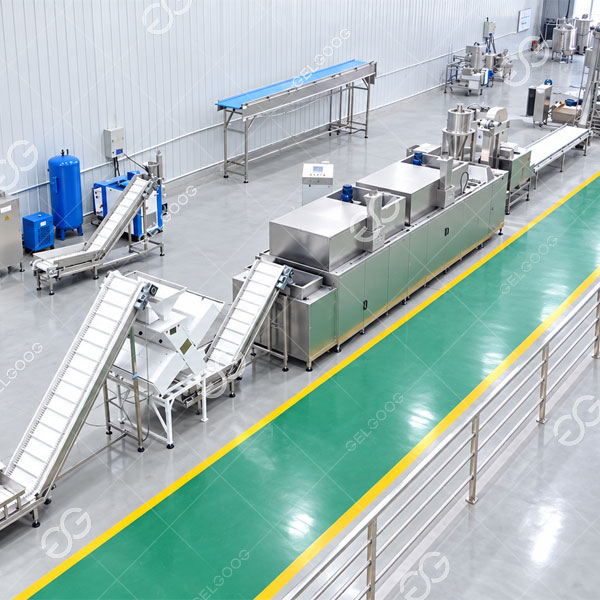
For many manufacturers, a brownfield upgrade may reduce construction time and reuse suitable roasting, grinding, conveying, utility, and storage assets. But a machine quotation should come after a gap assessment—not before it.
Confirm the Buyer and Product Route First
Before reviewing the factory, define the commercial and technical scope.
An RUTF-related project may involve three different routes:
- Producing peanut paste that meets the required raw-material and food-safety conditions for use in RUTF.
- Purchasing qualified peanut paste, then completing RUTF dosing, mixing, and sachet packaging.
- Processing peanuts through to finished RUTF sachets and secondary packaging in one integrated facility.
These routes require different investments. A peanut butter factory may already cover much of the first route. It may cover only part of the third.
UNICEF explains that the Codex Guidelines define RUTF as a food for special medical purposes and set out international requirements for food safety and nutritional composition. Country regulations and individual procurement requirements may add further conditions. Read UNICEF’s Codex RUTF guidance.
The buyer matters just as much as the formula. UNICEF’s 2025 update reports that global potential RUTF capacity exceeds funded demand and that some producers have idle capacity. A brownfield upgrade should therefore begin with a confirmed buyer, a justified local-supply rationale, or a separately assessed multi-product business case. Read the UNICEF RUTF Market and Supply Update 2025.
Before you request an upgrade proposal, clarify:
- Who is expected to buy the finished product?
- What annual demand has been confirmed, forecast, or only discussed?
- Will the factory make RUTF only, or also RUSF, LNS, or other nutrition products?
- Is the target formula defined and owned by a qualified technical team?
- Which product specification, local regulation, and buyer requirements will apply?
Without these answers, a factory may be technically capable of producing the product but commercially underused.
Which Existing Peanut Butter Equipment May Be Reused?
A well-managed peanut butter plant may already have valuable infrastructure. The task is to review each area against the target product and quality-control plan.
| Existing area |
May be reused |
What must be checked |
| Peanut receiving and storage |
Receiving bays, dry storage, conveying |
Lot identification, sampling, segregation, pest control, moisture protection, traceability |
| Roasting and cooling |
Roaster, cooler, conveying |
Temperature control, product carryover, cleanability, process records, capacity matching |
| Peeling and grinding |
Peeling equipment, grinders, paste pumps, tanks |
Cleaning access, foreign-material control, residue, particle-size consistency, condition of contact parts |
| Utilities |
Power, compressed air, water, ventilation |
Reliability, hygienic suitability, filtration, backup arrangements, actual load |
| Packaging area |
Enclosure, conveyors, coding equipment |
Zoning, pouch-filling suitability, seal checks, weight control, product flow |
| Quality room |
Lab space and sample storage |
Testing capability, sampling plan, retained samples, release records, traceability |
An existing peanut butter processing line can provide a solid base for roasting, peeling, grinding, blending, and paste transfer. RUTF production adds further requirements around ingredient release, premix dosing, packaging validation, and batch control.
A machine should not be retained simply because it is stainless steel or still operating. Review whether it can be cleaned, inspected, documented, and operated within the control plan required for the finished product.
Raw Peanut Control Is Usually the First Critical Gap
The main risk often starts before peanuts enter the line.
Roasting contributes to process control and product consistency, but it should not be treated as a complete response to aflatoxin risk. Aflatoxin control begins with supplier management, storage, lot sampling, testing, segregation, and rejection decisions. The Codex Code of Practice for the Prevention and Reduction of Aflatoxin Contamination in Peanuts addresses control measures across production, harvesting, storage, transport, and processing.
Map the raw-material route from receiving to grinding:
- Where are incoming lots held before release?
- Who samples them, and under which documented procedure?
- How are accepted, pending, and rejected lots separated?
- Can rejected material or dust re-enter the main process?
- Are cleaning and inspection points accessible before roasting and grinding?
- Can each finished batch be traced back to its peanut lots?
If the factory relies on open storage, handwritten labels, and informal material release, a new sachet filler will not solve the underlying problem.
Where roasting capacity needs to be added or upgraded, review the full interface before and after the roaster. A continuous groundnut roasting and cooling machine may fit the process, but final configuration depends on raw-material condition, required throughput, cleaning method, heating source, peeling arrangement, and downstream grinding capacity.
Map the Formula and Mixing Process in Detail
Commercial peanut butter production usually focuses on taste, texture, oil stability, and retail consistency. RUTF production also requires controlled addition and distribution of the approved formula ingredients.
Map how sugar, milk powder, oils, premix, and peanut paste are received, released, weighed, added, mixed, transferred, and recorded. This exercise often exposes gaps that are not visible in a basic equipment list.
For example, an existing mixer may be mechanically sound but still unsuitable if the factory cannot demonstrate controlled dosing, appropriate mixing conditions, cleaning completeness, or batch traceability.
Review the following points:
- Storage and release controls for sensitive ingredients and premixes.
- Calibrated weighing equipment and recorded batch data.
- Defined addition sequence and mixing conditions for the approved formula.
- A sampling and mixing-verification plan agreed by the product and quality teams.
- Pumps, pipework, and buffer tanks that avoid unnecessary residue and uncontrolled hold-up.
- Cleaning and changeover procedures if more than one nutrition product will be produced.
The equipment supplier can define the process scope, equipment interfaces, and operating limits. The product owner, laboratory, quality team, and buyer determine how the formula and verification programme are approved. Keep these responsibilities clear before equipment is ordered.
Treat Sachet Packaging as a Separate Upgrade Project
Many peanut butter plants fill jars, tubs, or bulk containers. RUTF is generally packed in small sachets, so the filling and sealing section needs its own review.
Look beyond filling speed:
- Can the paste reach the filler with stable flow behaviour?
- Can the process maintain the required net weight consistently?
- Is the sealing area protected from oil or powder contamination?
- How will seal integrity be checked and leaking packs identified?
- Can codes link sachets and cartons to the relevant production batch?
- Does the selected film support the agreed distribution and shelf-life requirements?
- Is there space for checkweighing, rejection, secondary packing, retained samples, and finished-goods hold?
A pouch that appears sealed is not automatically a validated pack. Product condition, filler settings, seal cleanliness, film structure, sealing parameters, handling, and inspection methods all influence final pack integrity.
Plan packaging trials before final acceptance. Agree in advance what will be verified during FAT, commissioning, and routine production. Do not wait until the equipment is installed to decide how pack quality will be assessed.
Check the Factory Layout Through Product and People Flow
Brownfield projects must work within an existing building, but the old layout should still be challenged where it creates avoidable risk.
Review six flows separately:
- Raw peanut and incoming ingredient flow
- Released ingredients entering production
- Personnel movement
- Packaging-material movement
- Finished-product movement
- Waste, maintenance, cleaning, and rework movement
Repeated cross-flow makes a plant harder to clean and control. In particular, raw-material handling should not create unnecessary exposure in areas where the finished product is mixed, filled, packed, or held for release.
| Layout review point |
Why it matters |
| Raw and finished product separation |
Supports hygiene and reduces unnecessary cross-flow |
| Ingredient-weighing location |
Helps control additions and batch records |
| Cleaning and maintenance access |
Avoids inaccessible areas becoming long-term risk points |
| Packaging-material storage |
Protects sachets and cartons before use |
| Product hold-and-release area |
Prevents unreleased stock from being shipped |
| Retained-sample storage |
Supports traceability and investigation |
| Expansion space |
Allows future buffering, testing, or product flexibility |
The right layout is not necessarily a complete rebuild. In many cases, targeted zoning, defined material routes, improved storage, or additional buffer space can address the highest-priority gaps.
Calculate Capacity From Finished Output
A grinder nameplate or roaster rating does not define final RUTF output.
Usable capacity depends on the complete production chain:
- approved raw-material availability;
- roasting and cooling throughput;
- grinding and paste transfer;
- ingredient release and batch preparation;
- mixing and holding time;
- sachet-filling performance;
- film changes and planned stoppages;
- cleaning and product changeovers;
- quality holds and finished-product release.
This matters especially in brownfield projects, where existing equipment rarely matches perfectly. A high-output grinder does not resolve a packaging bottleneck. A fast filler does not resolve slow ingredient release or extended cleaning cycles.
Calculate capacity from finished, accepted product—not from the fastest individual machine. The final capacity basis should include annual confirmed demand, operating shifts, expected product mix, downtime assumptions, cleaning time, and the slowest validated step. Final results should be confirmed through engineering review, raw-material evaluation, and FAT or commissioning trials.
Start With a Brownfield Gap Assessment
Your project is ready for an equipment proposal when you can provide:
- Confirmed or clearly defined buyer and annual-demand scenario.
- Target route: peanut paste only, finished RUTF, or a flexible nutrition-product line.
- Current factory layout, photos, equipment list, and available utility information.
- Peanut origin, storage practice, available certificates of analysis, and sampling approach.
- Formula status and responsible technical or nutrition team.
- Required pouch format, target net weight, film information, and carton configuration.
- Existing quality controls, laboratory support, traceability process, and batch-release approach.
- Clear responsibility boundaries among the factory, equipment supplier, laboratory, packaging supplier, and buyer.
If these inputs are not yet available, begin with a factory gap assessment rather than a final equipment list.
FAQ
1.Can a normal peanut butter factory produce RUTF?
Potentially, yes. It may already have useful roasting, grinding, utility, and building infrastructure. It still needs review for raw-material control, formula handling, micronutrient dosing, hygienic zoning, sachet packaging, verification, and traceability.
2.Can roasting remove aflatoxin from peanuts for RUTF?
Roasting should not be treated as a complete aflatoxin-control method. Control begins with sourcing, storage, sampling, testing, segregation, and rejection of unsuitable lots.
3.Do we need a completely new factory for RUTF production?
Not always. An existing factory can be upgraded if the building, utilities, equipment condition, process flow, and quality-management system can be adapted to the target product and buyer requirements.
4.Can one line produce both RUTF and RUSF?
It may be possible, but it depends on the approved formulas, ingredient handling, cleaning validation, product separation, packaging requirements, and buyer acceptance. Assess compatibility before finalising the process design.
5.What should we prepare before contacting an RUTF equipment supplier?
Prepare the target product, buyer or demand scenario, current layout, equipment list, utility information, raw-material details, pouch format, and current quality-control process.
Get a Practical Upgrade Scope Before You Buy Equipment
If your factory already processes peanuts, you may not need to start from zero. But the project should be designed around the actual gap between your current operation and the product, packaging, and verification system you need.
GELGOOG can review the route from peanut receiving through paste preparation, mixing, buffering, filling, and packing, then help identify which modules can be retained, upgraded, or added. Explore the RUTF peanut paste processing line and review this RUTF peanut butter processing plant project for reference.
Send your current layout, equipment list, target product, packaging format, and expected annual demand to receive an initial brownfield upgrade assessment.
Get a Brownfield Upgrade Assessment WhatsApp: +86 155 1557 1373

Sep 17,2026